

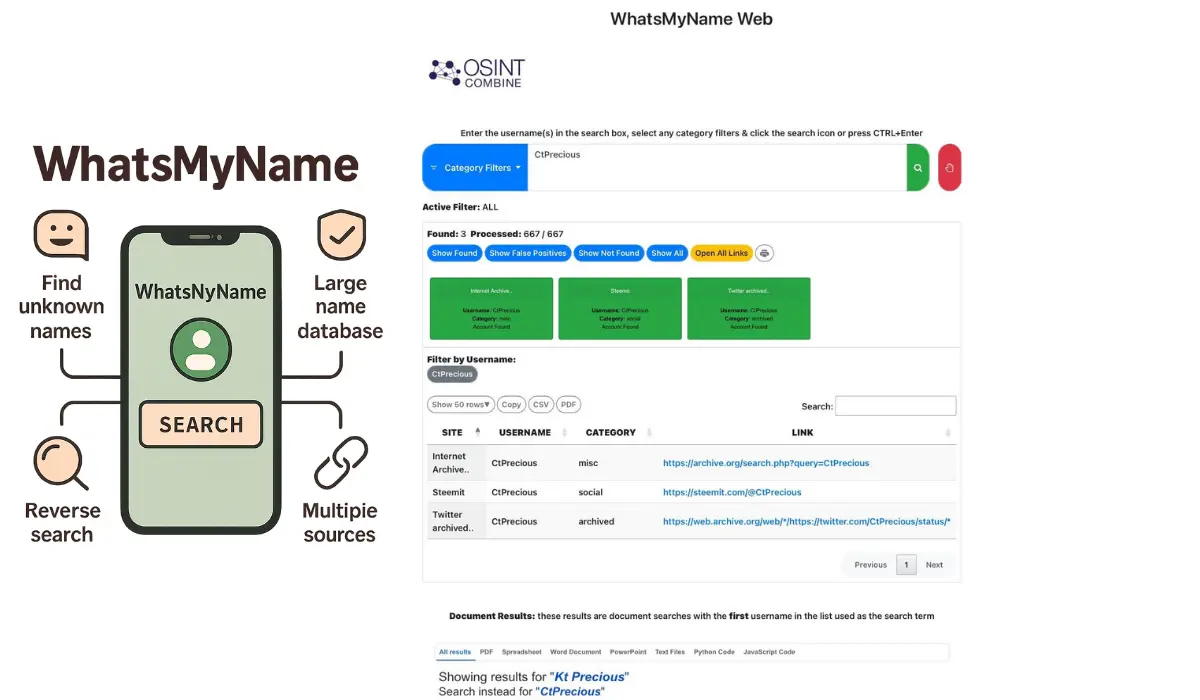
In the world of digital investigations and Open Source Intelligence (OSINT), tracking online identities across multiple platforms is essential. The WhatsMyName app has emerged as one of the most powerful and reliable tools for username enumeration, helping security researchers, investigators, and cybersecurity professionals uncover digital footprints across hundreds of websites.
What Is WhatsMyName App?
WhatsMyName is a free, web-based OSINT tool that searches for specific usernames across 600+ online platforms simultaneously. Created by Micah “WebBreacher” Hoffman and Chris Poulter, this tool has become an indispensable resource for anyone conducting digital investigations, security research, or reputation management.
Unlike manual searches that would take hours or even days, WhatsMyName automates the process and delivers comprehensive results in seconds, making it a game-changer for OSINT professionals worldwide.
Key Features That Set WhatsMyName Apart
Extensive Platform Coverage
WhatsMyName searches across an impressive array of platforms including:
- ): Major social media networks (Twitter, Instagram, LinkedIn, TikTok)
- ): Professional and coding communities (GitHub, GitLab, Stack Overflow)
- ): Forums and discussion boards
- ): Gaming platforms and communities
- ): Business directories and professional networks
- ): Content sharing sites and blogs
Real-Time Verification
The tool performs live checks on each platform, ensuring you get accurate, up-to-date results rather than outdated information from cached databases.
User-Friendly Interface
The clean, intuitive web interface makes it accessible even for beginners. No installation is required—simply visit whatsmyname.app and start searching immediately.
Export Capabilities
Results can be exported in multiple formats including CSV and PDF, making it easy to document findings and share them with team members or clients.
Category Filtering
Users can filter searches by platform categories, allowing for more targeted investigations and faster results when you’re only interested in specific types of websites.
How to Use WhatsMyName: Step-by-Step Guide
Step 1: Navigate to whatsmyname.app in your web browser
Step 2: Enter the username(s) you want to search in the search box. You can search for multiple usernames simultaneously by entering them separately.
Step 3: Apply category filters if you want to narrow your search to specific platform types (optional but recommended for focused investigations)
Step 4: Click the search icon or press CTRL+Enter to initiate the search
Step 5: Review results displayed as clickable icons on the left side and in a searchable table on the right
Step 6: Click on any result to visit the actual profile page and verify the information
Step 7: Use the automated Google and document searches that appear at the bottom for additional intelligence gathering
Why Usernames Matter in OSINT Investigations
People often reuse the same or similar usernames across multiple platforms, creating a consistent digital trail. These usernames can reveal:
- ): Personal Information: Names like “JohnSmith85” may indicate a birth year
- ): Interests and Hobbies: Usernames like “GamerPro2020” or “YogaLover88” reveal personal interests
- ): Professional Identity: Consistent use across LinkedIn, GitHub, and other professional platforms
- ): Geographic Location: Regional references or local slang in usernames
- ): Online Behavior Patterns: How a person presents themselves differently across various platforms
Critical Reminder: Enumeration Does Not Equal Validation
While WhatsMyName is incredibly powerful, it’s essential to remember that finding a username on multiple platforms doesn’t automatically mean they all belong to the same person. Always verify your findings by:
- ): Cross-referencing profile pictures and biographical information
- ): Checking for consistent details across multiple accounts
- ): for unique identifiers or specific writing styles
- ): Verifying timestamps and activity patterns
- ): Using complementary OSINT tools for confirmation
Real-World Applications
Security Research
Cybersecurity professionals use WhatsMyName to assess potential threats, track malicious actors, and investigate security incidents by mapping out adversaries’ digital presence.
Digital Investigations
Law enforcement and private investigators leverage the tool to gather evidence, track suspects, and build comprehensive profiles during investigations.
Brand Protection
Companies use WhatsMyName to monitor brand mentions, detect impersonation attempts, and protect their online reputation across multiple platforms.
Personal Security
Individuals can use the tool to assess their own digital footprint, identify potential privacy risks, and manage their online presence more effectively.
WhatsMyName vs. Alternative Tools
While other username enumeration tools exist (like Sherlock, Maigret, and Spiderfoot), WhatsMyName stands out for several reasons:
- ): Browser-Based: No installation required, works on any device
- ): Constantly Updated: The community actively maintains and updates the platform database
- ): Open Source: The JSON database is freely available on GitHub for developers
- ): Integration-Friendly: Many other OSINT tools integrate WhatsMyName’s database
- ): Active Community: Regular contributions ensure new platforms are added consistently
Best Practices for Using WhatsMyName
- 1. Start Broad, Then Narrow: Begin with general searches, then use category filters to focus on specific platforms
- 2. Document Everything: Export your findings immediately and maintain detailed records of your investigation
- 3. Verify Manually: Always click through to verify accounts personally—automated tools can produce false positives
- 4. Combine Tools: Use WhatsMyName alongside other OSINT tools for comprehensive investigations
- 5. Stay Ethical: Respect privacy laws and ethical guidelines in your jurisdiction
- 6. Consider Attribution: Be mindful that clicking “Open All Links” will create attribution traces from your system
Technical Capabilities
WhatsMyName’s technical architecture includes:
- ): JSON-based database of platform detection rules
- ): Pattern recognition for response analysis
- ): False positive filtering algorithms
- ): Regular expression matching for username validation
- ): Rate limiting to prevent platform blocking
- ): Continuous platform monitoring and updates
Privacy and Security Considerations
WhatsMyName operates with a zero-logging policy, meaning your search queries are not stored on servers. However, when you click through to view profiles on external sites, those platforms may log your visit. Use appropriate operational security measures when conducting sensitive investigations.
The Future of Username Enumeration
As online platforms continue to evolve, tools like WhatsMyName must adapt to new authentication methods, privacy controls, and platform architectures. The active open-source community ensures WhatsMyName remains relevant by continuously adding new platforms and updating detection methods.
Getting Started Today
Ready to begin your username enumeration journey? Simply visit whatsmyname.app and start searching. The tool requires no registration, no payment, and no complicated setup—just enter a username and discover the digital footprint that exists across the internet.
Whether you’re a seasoned OSINT professional or just beginning your journey into digital investigations, WhatsMyName provides the comprehensive username intelligence you need to succeed in today’s interconnected digital landscape.
Conclusion
WhatsMyName has established itself as an essential tool in the OSINT toolkit, offering unparalleled username enumeration capabilities across hundreds of platforms. Its combination of extensive coverage, ease of use, and accurate results makes it the go-to choice for professionals worldwide.
By understanding how to use WhatsMyName effectively and following best practices, you can uncover valuable intelligence, protect your digital identity, and conduct thorough investigations with confidence. Start exploring the power of username enumeration today and see what digital footprints are waiting to be discovered.